
Up to 55 steps
Every Alpha line (Hostaform, Olive, Pear, Barrel Oak, Micarta, Balkhauser Kotten), the Karl Güde line, the Franz Güde filleting knife and Damascus.
How a Güde knife is made
A Güde blade starts as a bar of chrome-vanadium-molybdenum steel and leaves Solingen in a hand-riveted shipping sleeve. In between, depending on the line, it passes through up to 55 manual operations. These are the stages, photographed in the Güde manufactory.

In the manufactory
Eighteen of the operations, in the order they happen.

Slugs are cut from an 8-metre bar of chrome-vanadium-molybdenum knife steel.
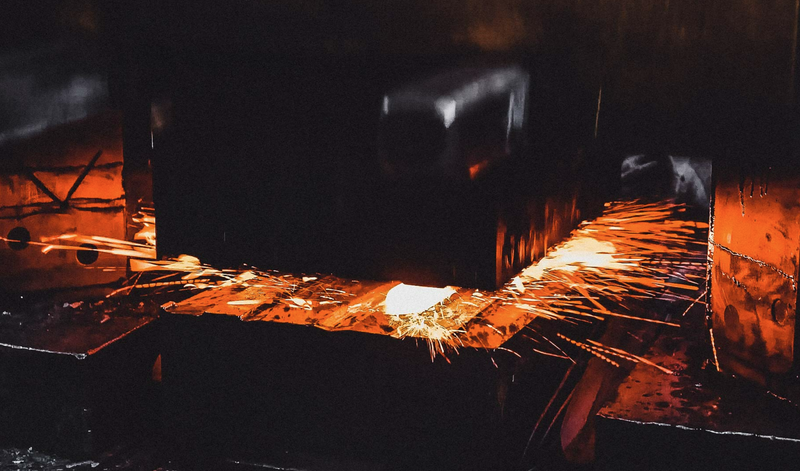
Each slug is heated to around 1,050 °C and forged in the die with three to four hammer blows.

The knife blank is stamped out of the forging.

After rough grinding, calibrating and cleaning, the blades go into ice-hardening.

They are cooled to −80 °C to refine the structure of the steel.
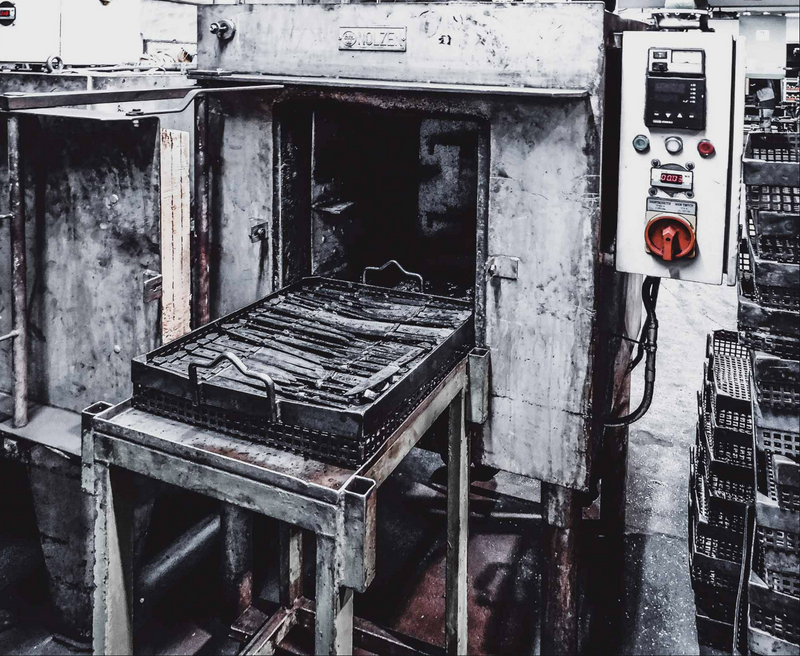
The blades are tempered in two stages, which makes them tough rather than brittle.
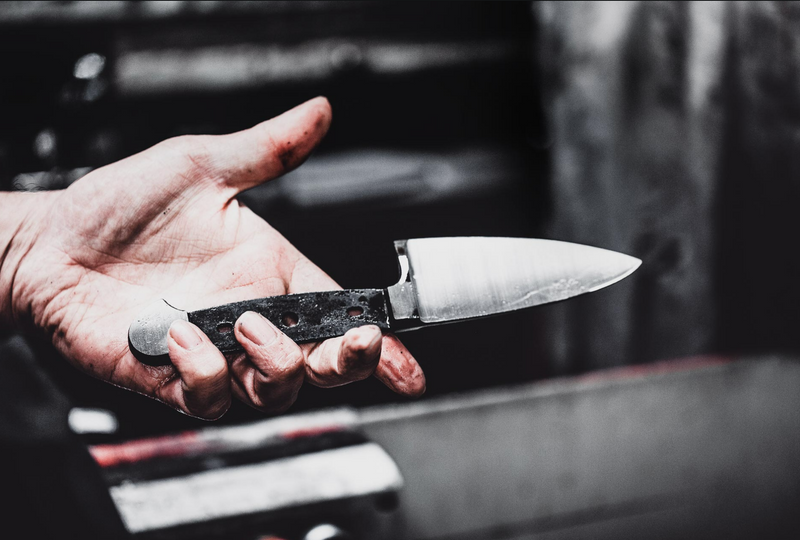
The blade is pre-ground, then the back. The back is fine-ground, the bolster sharpened and the inside of the handle pre-ground.

The bolsters are pre-ground in five steps, followed by the fine grinding of the blade, known in Solingen as “pliesten”.
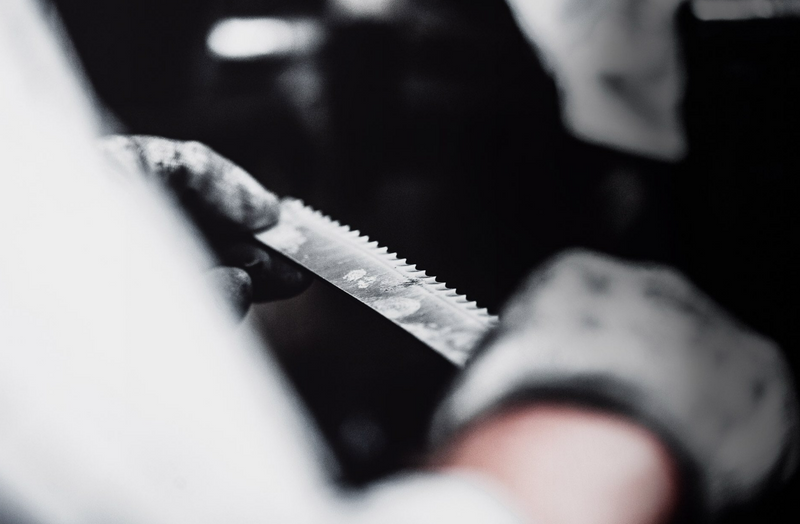
Serrations are cut now: the Güde serrated edge on bread knives, and the teeth on tomato, cheese and steak knives. With the blade finished, the handle can be fitted.
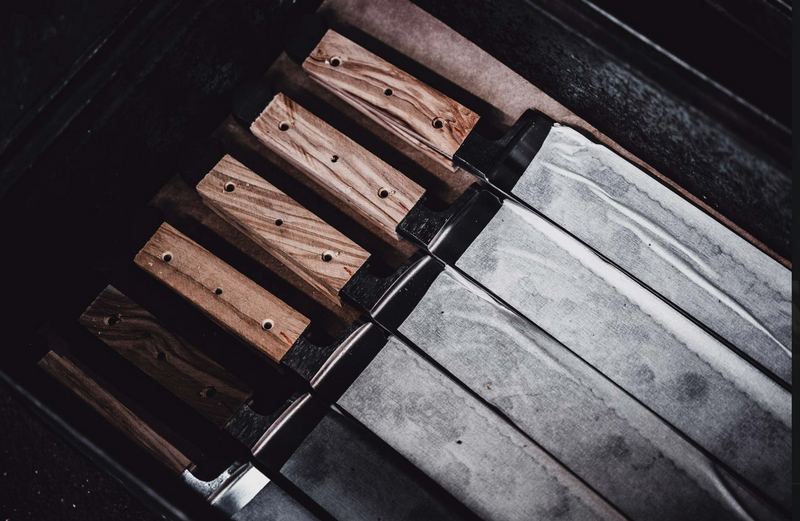
Handle scales are cut from the wood, contour-milled, matched to the knife and drilled for the rivets.
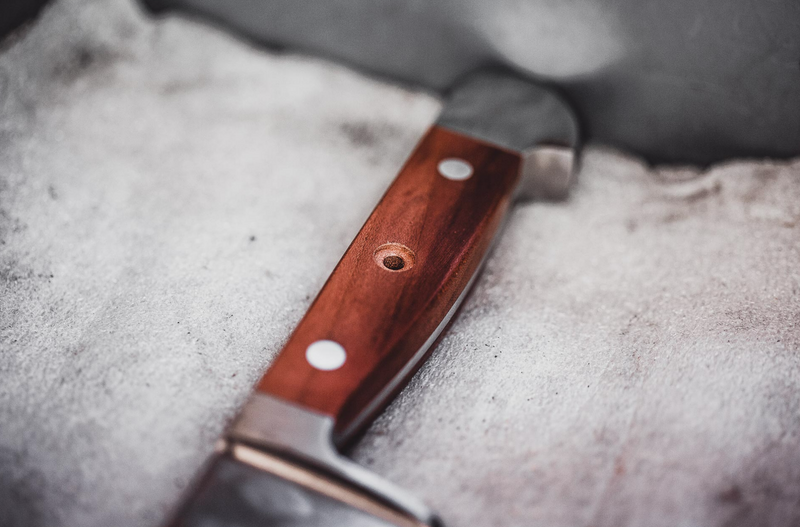
The rivet holes are countersunk, and handle and blade are riveted together.

The wood is sanded down to the steel in about five operations, then the same five again with a finer belt.
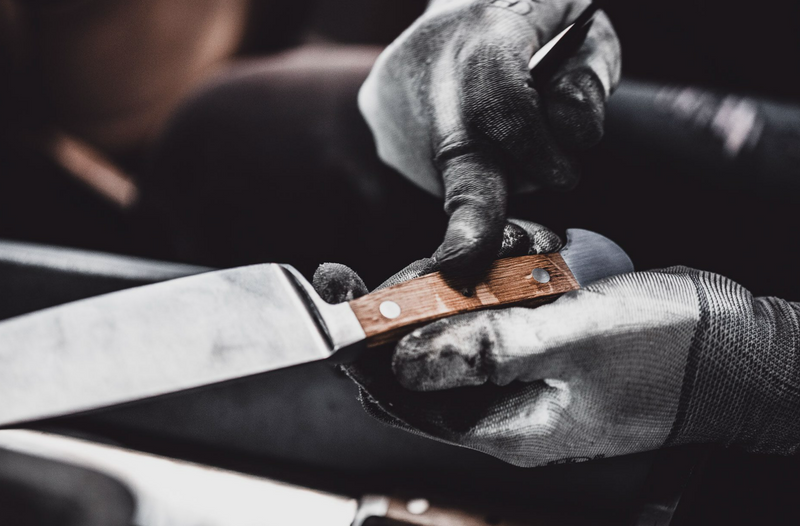
The back of the knife is finished, the front bolster fine-ground and the handle pre-polished.
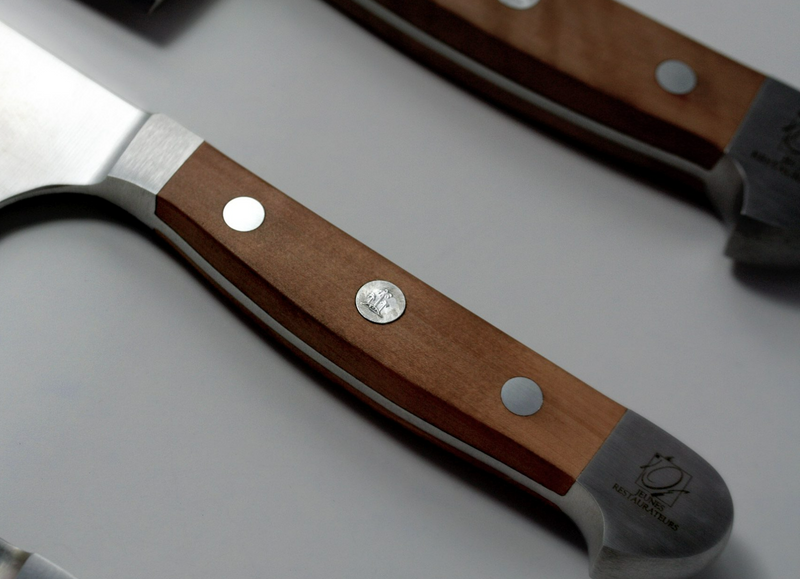
The central decorative rivet is set and the handle polished. Then the edge is ground and honed by hand.
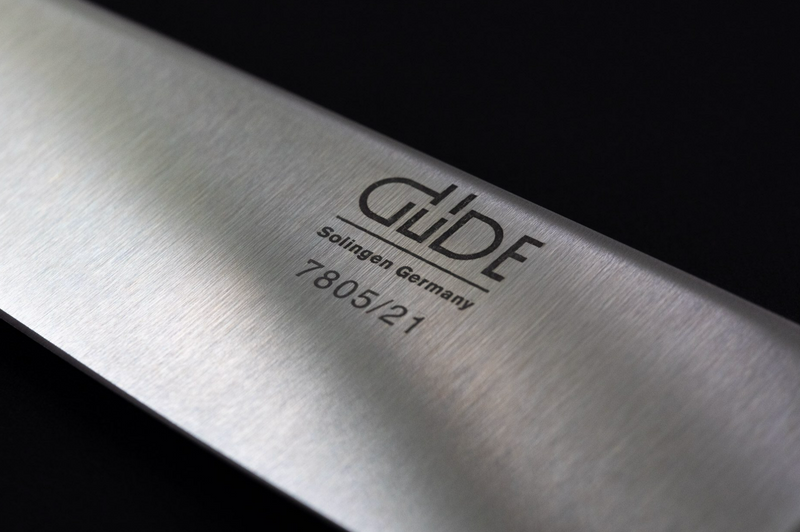
The Güde logo is etched onto the blade.
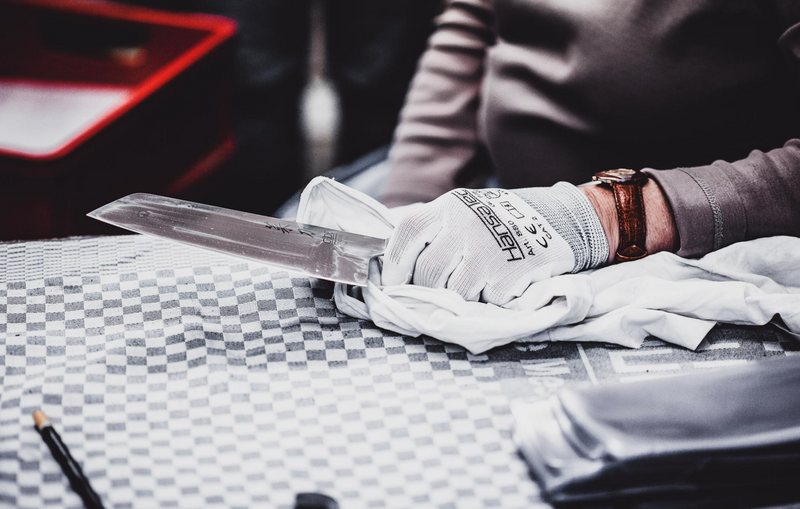
Each knife is cleaned and checked in quality control.

Knives that pass are given their protective cover.

The handmade shipping sleeves are riveted and labelled, and the knives are packed for dispatch.
By line
The number of manual operations depends on the line: the more hand-fitted parts a knife has, the more steps it takes.
Every Alpha line (Hostaform, Olive, Pear, Barrel Oak, Micarta, Balkhauser Kotten), the Karl Güde line, the Franz Güde filleting knife and Damascus.
Kappa, forged in one piece of stainless steel from the tip of the blade to the end of the handle.
Ask the Güde Shop USA team in Florida.